Tower of Babel vs Modern Linguistics: The Hilarious Myth
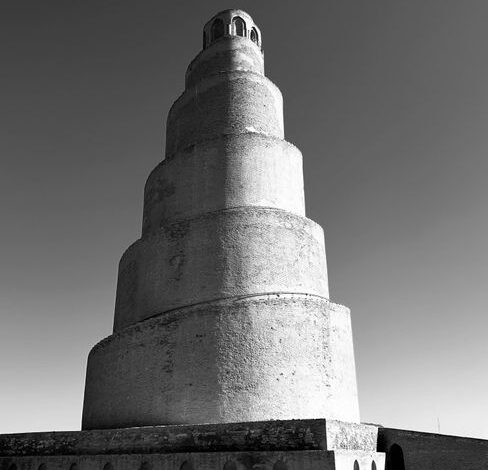
Picture the scene: Ancient bricklayers high up in the plains of Shinar, casually building a skyscraper designed to poke the celestial ceiling. God looks down, says, “Nope, can’t have that,” and instantly scrambles every human language like a bowl of cosmic alphabet soup. Boom—the Tower of Babel myth is born, explaining why your Uber driver in Paris speaks French while you struggle to remember high school “bonjour.”
Fast forward a few millennia, and modern linguistics walks into the room, coffee in hand, wearing thick-rimmed glasses, and looks at the Babel story with the kind of exhausted sigh only a scientist can muster. Let’s dive into the hilarious mismatch between ancient myth and modern linguistic science.
The Myth: One Day Everyone Spoke “Uruk-Speak”
According to the Book of Genesis, humanity started out as a tight-knit, mono-linguistic squad. Everyone was vibing, using the exact same vocabulary, probably chatting about weather patterns and brick-laying techniques. Then, divine intervention hit like a sudden, chaotic software update. Suddenly, Dave is speaking Proto-Germanic, Sarah is dropping Mandarin tones, and nobody knows who brought the snacks. Construction grinds to a halt, and humanity scatters across the globe out of pure embarrassment.
The Reality: Language Evolution is a Slow-Motion Marathon
Linguists reading the Babel story probably chuckle into their spectrograms. Modern historical linguistics tells us that language didn’t shatter all at once; it branched out like a massive, sprawling family tree over hundreds of thousands of years.
Think of it less like a sudden explosion of a glass vase and more like a massive game of Telephone played across continents over 50,000 years. As human populations migrated, isolated themselves, and invented new slang for “that saber-toothed cat that keeps eating our friends,” languages naturally mutated. No divine thunderbolt required—just standard human geographic drift and laziness in pronunciation.

Babel vs. Modern Linguistics: A Tale of Two Worldviews
- The Tower of Babel View: Language diversity is a punishment. It’s a divine glitch designed to keep humanity divided and humbled.
- Modern Linguistics View: Language diversity is a feature, not a bug. It’s an extraordinary testament to human adaptability, culture, and creativity.
While the Babel narrative views multilingualism as the ultimate barrier to human cooperation, linguists celebrate the estimated 7,000 languages currently spoken on Earth as a rich tapestry of human cognition. Every language has its own unique way of slicing up reality.
The Modern Irony: We’re Building a Digital Babel Tower
Here is where the mismatch gets truly hilarious. While ancient builders failed because they couldn’t communicate, modern humans are currently trying to rebuild the Tower of Babel—not with bricks and mortar, but with the internet, emojis, and Google Translate.
We are desperately trying to unify global communication once again. We use English as a global lingua franca, meme culture as a universal pictorial language, and AI translators to bridge the gaps. If God looked down today, He wouldn’t need to scramble our languages; He’d probably just watch us reply to serious geopolitical debates with a crying-laughing emoji and call it a day.
Wrapping Up: Why the Myth Still Matters
Sure, modern linguistics completely dismantles the literal timeline and mechanism of the Tower of Babel. We know that language wasn’t split overnight in ancient Mesopotamia. But as a metaphor for human ambition, cultural division, and our eternal struggle to understand one another, the Babel story remains undefeated.
So, the next time you’re fumbling through a translation app on vacation, remember: you’re not just dealing with a foreign language—you’re participating in a multi-millennia divine comedy. Keep building your towers, folks, just maybe check the blueprints first.