Embryology in the Quran: Modern Science vs. Medieval Views
Introduction: The Intersection of Faith and Science
\n\n\n\nFor centuries, the relationship between sacred texts and empirical science has been a subject of intense discussion, debate, and discovery. Among religious texts, the Quran has frequently drawn attention for verses that describe human development in the womb—a science known today as embryology.
\n\n\nSkeptics often argue that these descriptions reflect the limited medical knowledge of 7th-century Arabia, heavily influenced by ancient Greek and Indian physicians like Galen and Aristotle. Conversely, proponents argue that the Quranic descriptions contain biological truths that were entirely unknown at the time, pointing to them as evidence of divine origin. In this post, we will take an objective, comprehensive look at embryology in the Quran, comparing its verses with both medieval understandings and modern scientific discoveries.
\n\n\n\nThe Quranic Stages of Embryonic Development
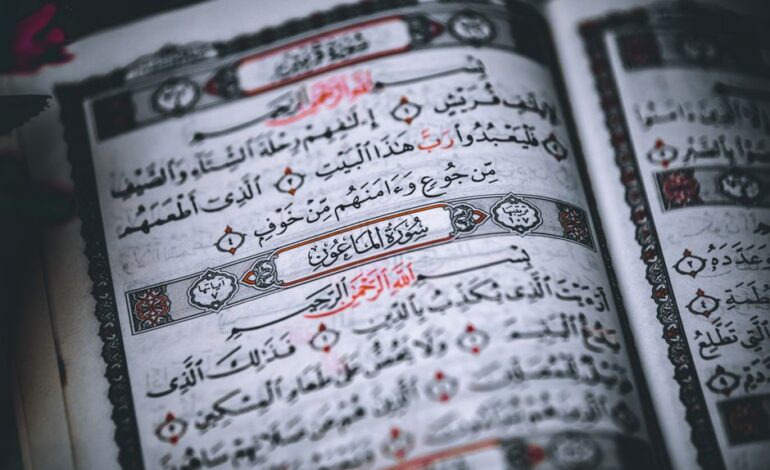
\n\n\n\nThe primary text frequently cited in discussions of Islamic embryology is Surah Al-Mu’minun (Quran 23:12–14):
\n\n\n\n\n\n\n\n\”And certainly did We create man from an extract of clay. Then We placed him as a sperm-drop (nutfa) in a firm lodging. Then We made the sperm-drop into a clinging clot (alaqa), and We made the clot into a lump [of flesh] (mudgha), and We made [from] the lump, bones, and We covered the bones with flesh; then We developed him into another creation. So blessed is Allah, the best of creators.\”
These verses outline a sequential progression of human creation. To understand the significance of these words, we must break down the key Arabic terms used: Nutfa, Alaqa, and Mudgha.
\n\n\n\n1. Nutfa (Drop / Zygote & Blastocyst)
\n\n\nThe term nutfa is traditionally translated as a drop of fluid. Scientifically, modern embryologists map this to the fertilization stage and the initial stages of zygote and blastocyst formation, where a minute quantity of fluid initiates creation.
\n\n\n\n2. Alaqa (Clinging Clot / Leech-like Structure)
\n\n\nThe word alaqa carries multiple meanings in Arabic, including a blood clot, something that clings, and a leech. In the early weeks of gestation (around day 7 to 24), the human embryo implants itself into the uterine wall, relying on the mother’s blood supply just like a leech. Furthermore, visually, an early embryo strikingly resembles a leech.
\n\n\n\n3. Mudgha (Chewed Lump)
\n\n\nMudgha translates to a chewed substance or lump of flesh. Around the 4th week, somites develop along the back of the embryo, giving it a superficial appearance resembling a piece of meat that has been chewed by teeth. Remarkably, microscopic indentations corresponding to these somites look precisely like teeth marks.
\n\n\n\nMedieval Understanding vs. Modern Embryology
\n\n\n\nTo truly evaluate whether the Quran presented revolutionary knowledge, we must examine what people—including the greatest medical minds—believed during the 7th century.

The Greek Influence: Aristotle and Galen
\n\n\nIn the 4th century BCE, Aristotle taught that the embryo was formed by the coagulation of menstrual blood activated by male semen, which he viewed as a form of purified blood. Centuries later, Galen expanded on this, introducing elaborate theories about the phases of embryonic growth based on the formation of blood, flesh, and bones.
\n\n\nCrucially, medieval science often relied heavily on philosophical speculation rather than direct observation, as human dissection was extremely rare or prohibited in many cultures at the time.
\n\n\n\nHow the Quran Differs from Greek Misconceptions
\n\n\nCritics often claim that the Quran merely borrowed from Galen or Aristotle. However, comparative analysis reveals notable differences:
\n\n\n- \n
- Menstrual Blood Theory: The Quran makes no mention of menstrual blood forming the basis of the embryo, directly bypassing a major erroneous belief of Greek medicine. \n
- Simultaneous vs. Sequential Formation: While some ancient physicians believed organs formed all at once, the Quran explicitly describes a precise, step-by-step sequential development (nutfa -> alaqa -> mudgha -> bones -> flesh). \n
The Modern Scientific Perspective
\n\n\n\nIn the late 20th century, the intersection of the Quran and embryology gained widespread attention when prominent scientists—most notably Professor Keith Moore, author of the textbook The Developing Human—evaluated the embryological verses of the Quran.
\n\n\nDr. Moore stated that the descriptions in the Quran could not have been based on the scientific knowledge available in the 7umbing-century. He noted that classifying the embryo through its changing external and internal shapes at various milestones aligned remarkably well with modern embryological staging systems.
\n\n\n\nNuance, Interpretation, and Academic Debate
\n\n\nWhile many believers find profound harmony between science and scripture in these verses, academic historians and secular scientists urge caution. They raise several points for critical consideration:
\n\n\n\n- \n
- Language and Metaphor: Critics and literary scholars argue that religious texts use poetic, phenomenological language rather than strict scientific terminology. Words like alaqa can be interpreted in multiple ways depending on linguistic context. \n
- Post-Hoc Fitting: Skeptics suggest that modern readers look back at vague ancient texts and interpret them in ways that fit modern scientific discoveries—a phenomenon known as the “Texas Sharpshooter Fallacy” (drawing a bullseye around the bullet hole after it has been fired). \n
- Embryological Inaccuracies (According to Critics): Some biological debates center around the verse stating bones are formed before being clothed with flesh. Scientifically, cartilage models of bones and the surrounding muscle tissue develop in close coordination, though chondrification (bone formation) precedes full muscular development in certain regions. \n
Conclusion: Bridging Faith and Reason
\n\n\nThe discourse surrounding embryology in the Quran remains a fascinating bridge between faith, history, and science. Whether viewed as a miraculous anticipation of modern microscopy or as an eloquent, poetically framed reflection on the wonders of human creation, the verses invite deep contemplation.
\n\n\nUltimately, science constantly evolves as tools become more advanced, while sacred texts offer timeless philosophical and spiritual frameworks. Exploring how medieval understandings compare to modern realities deepens our appreciation for both the history of medicine and the enduring power of religious literature.
\n” }