Information Age Islam: How the Internet Exposes Inconsistencies
Toward a Resilient Future: Reformation or Fragmentation?
The exposure of theological inconsistencies via the internet does not necessarily spell the decline of Islam. Throughout history, major religions have undergone profound transformations when confronted with new technologies of communication—from the printing press to the internet. The printing press catalyzed the Protestant Reformation in Christianity; the internet is currently acting as a catalyst for a decentralized, often turbulent evolution within Islam.
To survive and thrive in the Information Age, Islamic thought must lean into intellectual transparency, embrace historical-critical methods of study, and engage honestly with ethical critiques. Clinging to rigid, unyielding dogmatism in an age of hyper-connectivity only accelerates the alienation of questioning minds.
Ultimately, Information Age Islam is forcing a transition from blind following (*taqlid*) to conscious, scrutinized conviction (*research-backed faith*). While the journey is uncomfortable and fraught with theological turbulence, it may ultimately pave the way for a more robust, self-aware, and ethically resilient global Islamic discourse.
The Rise of the “Muslim Skeptic” and Online Deconstruction
Perhaps the most visceral evidence of Information Age Islam is the phenomenon of online religious deconstruction. Across YouTube, TikTok, and specialized subreddits, former Muslims—often referred to as ex-Muslims—build massive platforms analyzing theological flaws, historical errors, and moral inconsistencies in Islamic scripture.
Conversely, a cottage industry of Islamic apologists has emerged to counter these critiques. This digital arena has transformed theology into a spectator sport. Debates between Muslim apologists and secular or Christian critics are livestreamed to hundreds of thousands of viewers in real-time. This high-visibility clash exposes everyday believers to doubts and counter-arguments that their parents’ generation never encountered.
Consequently, faith in the 21st century is rarely inherited passively; it is actively forged—or lost—in the digital crucible of the internet.
Toward a Resilient Future: Reformation or Fragmentation?
The exposure of theological inconsistencies via the internet does not necessarily spell the decline of Islam. Throughout history, major religions have undergone profound transformations when confronted with new technologies of communication—from the printing press to the internet. The printing press catalyzed the Protestant Reformation in Christianity; the internet is currently acting as a catalyst for a decentralized, often turbulent evolution within Islam.
To survive and thrive in the Information Age, Islamic thought must lean into intellectual transparency, embrace historical-critical methods of study, and engage honestly with ethical critiques. Clinging to rigid, unyielding dogmatism in an age of hyper-connectivity only accelerates the alienation of questioning minds.
Ultimately, Information Age Islam is forcing a transition from blind following (*taqlid*) to conscious, scrutinized conviction (*research-backed faith*). While the journey is uncomfortable and fraught with theological turbulence, it may ultimately pave the way for a more robust, self-aware, and ethically resilient global Islamic discourse.
The Clash Between Medieval Jurisprudence (Fiqh) and Modern Ethics
Islam, like all major ancient religions, developed a complex legal system (fiqh) shaped by the geopolitical, social, and economic realities of the medieval world—from the Umayyad and Abbasid eras onward. Issues such as slavery, concubinage, apostasy laws, and the legal status of women were addressed through the lens of that specific epoch.

In the Information Age, these medieval legal rulings are constantly measured against universal human rights, secular ethics, and modern legal standards. When internet users globally read classical rulings on plural marriage, inheritance disparities, or freedom of conscience, cognitive dissonance often sets in.
Instead of ignoring these contradictions, younger generations are demanding intellectually honest answers. This has led to two distinct digital movements:
- The Hyper-Literalist Apologetics: Online groups that double down on classical fiqh, attempting to defend medieval norms using modern internet rhetoric, often leading to deep alienation from broader societal values.
- The Progressive Reformers: Thinkers and content creators who argue that fiqh is dynamic, man-made, and must be completely decoupled from eternal ethical principles (sharia), advocating for a radical reinterpretation of texts.
The Rise of the “Muslim Skeptic” and Online Deconstruction
Perhaps the most visceral evidence of Information Age Islam is the phenomenon of online religious deconstruction. Across YouTube, TikTok, and specialized subreddits, former Muslims—often referred to as ex-Muslims—build massive platforms analyzing theological flaws, historical errors, and moral inconsistencies in Islamic scripture.
Conversely, a cottage industry of Islamic apologists has emerged to counter these critiques. This digital arena has transformed theology into a spectator sport. Debates between Muslim apologists and secular or Christian critics are livestreamed to hundreds of thousands of viewers in real-time. This high-visibility clash exposes everyday believers to doubts and counter-arguments that their parents’ generation never encountered.
Consequently, faith in the 21st century is rarely inherited passively; it is actively forged—or lost—in the digital crucible of the internet.
Toward a Resilient Future: Reformation or Fragmentation?
The exposure of theological inconsistencies via the internet does not necessarily spell the decline of Islam. Throughout history, major religions have undergone profound transformations when confronted with new technologies of communication—from the printing press to the internet. The printing press catalyzed the Protestant Reformation in Christianity; the internet is currently acting as a catalyst for a decentralized, often turbulent evolution within Islam.
To survive and thrive in the Information Age, Islamic thought must lean into intellectual transparency, embrace historical-critical methods of study, and engage honestly with ethical critiques. Clinging to rigid, unyielding dogmatism in an age of hyper-connectivity only accelerates the alienation of questioning minds.
Ultimately, Information Age Islam is forcing a transition from blind following (*taqlid*) to conscious, scrutinized conviction (*research-backed faith*). While the journey is uncomfortable and fraught with theological turbulence, it may ultimately pave the way for a more robust, self-aware, and ethically resilient global Islamic discourse.
The Clash Between Medieval Jurisprudence (Fiqh) and Modern Ethics
Islam, like all major ancient religions, developed a complex legal system (fiqh) shaped by the geopolitical, social, and economic realities of the medieval world—from the Umayyad and Abbasid eras onward. Issues such as slavery, concubinage, apostasy laws, and the legal status of women were addressed through the lens of that specific epoch.
In the Information Age, these medieval legal rulings are constantly measured against universal human rights, secular ethics, and modern legal standards. When internet users globally read classical rulings on plural marriage, inheritance disparities, or freedom of conscience, cognitive dissonance often sets in.
Instead of ignoring these contradictions, younger generations are demanding intellectually honest answers. This has led to two distinct digital movements:
The Rise of the “Muslim Skeptic” and Online Deconstruction
Perhaps the most visceral evidence of Information Age Islam is the phenomenon of online religious deconstruction. Across YouTube, TikTok, and specialized subreddits, former Muslims—often referred to as ex-Muslims—build massive platforms analyzing theological flaws, historical errors, and moral inconsistencies in Islamic scripture.
Conversely, a cottage industry of Islamic apologists has emerged to counter these critiques. This digital arena has transformed theology into a spectator sport. Debates between Muslim apologists and secular or Christian critics are livestreamed to hundreds of thousands of viewers in real-time. This high-visibility clash exposes everyday believers to doubts and counter-arguments that their parents’ generation never encountered.
Consequently, faith in the 21st century is rarely inherited passively; it is actively forged—or lost—in the digital crucible of the internet.
Toward a Resilient Future: Reformation or Fragmentation?
The exposure of theological inconsistencies via the internet does not necessarily spell the decline of Islam. Throughout history, major religions have undergone profound transformations when confronted with new technologies of communication—from the printing press to the internet. The printing press catalyzed the Protestant Reformation in Christianity; the internet is currently acting as a catalyst for a decentralized, often turbulent evolution within Islam.
To survive and thrive in the Information Age, Islamic thought must lean into intellectual transparency, embrace historical-critical methods of study, and engage honestly with ethical critiques. Clinging to rigid, unyielding dogmatism in an age of hyper-connectivity only accelerates the alienation of questioning minds.
Ultimately, Information Age Islam is forcing a transition from blind following (*taqlid*) to conscious, scrutinized conviction (*research-backed faith*). While the journey is uncomfortable and fraught with theological turbulence, it may ultimately pave the way for a more robust, self-aware, and ethically resilient global Islamic discourse.
Exposing Hadith Inconsistencies and Historical Contingency
One of the most significant impacts of the Information Age on Islam is the spotlight it has shone on the complexities and occasional contradictions within the Hadith literature (sayings and actions attributed to Prophet Muhammad).
In the past, ordinary believers viewed canonical collections like Sahih al-Bukhari and Sahih Muslim as monolithic blocks of absolute truth. Today, skeptical intellectuals, progressive reformers, and non-Muslim polemicists utilize search engines to highlight problematic narrations regarding science, gender relations, and human rights that were once buried deep in multi-volume classical Arabic texts.
For example, online forums frequently debate narrations concerning embryology, cosmology, or historical events that clash with modern scientific consensus. Furthermore, the sheer speed of information sharing allows critics to juxtapose differing hadiths on the same topic, revealing internal tensions. This exposure has forced contemporary Muslim theologians to move away from simplistic apologetics toward more nuanced frameworks, such as arguing for the “historical contingency” of certain rulings—a massive shift from traditional literalism.
The Clash Between Medieval Jurisprudence (Fiqh) and Modern Ethics
Islam, like all major ancient religions, developed a complex legal system (fiqh) shaped by the geopolitical, social, and economic realities of the medieval world—from the Umayyad and Abbasid eras onward. Issues such as slavery, concubinage, apostasy laws, and the legal status of women were addressed through the lens of that specific epoch.
In the Information Age, these medieval legal rulings are constantly measured against universal human rights, secular ethics, and modern legal standards. When internet users globally read classical rulings on plural marriage, inheritance disparities, or freedom of conscience, cognitive dissonance often sets in.
Instead of ignoring these contradictions, younger generations are demanding intellectually honest answers. This has led to two distinct digital movements:
The Rise of the “Muslim Skeptic” and Online Deconstruction
Perhaps the most visceral evidence of Information Age Islam is the phenomenon of online religious deconstruction. Across YouTube, TikTok, and specialized subreddits, former Muslims—often referred to as ex-Muslims—build massive platforms analyzing theological flaws, historical errors, and moral inconsistencies in Islamic scripture.
Conversely, a cottage industry of Islamic apologists has emerged to counter these critiques. This digital arena has transformed theology into a spectator sport. Debates between Muslim apologists and secular or Christian critics are livestreamed to hundreds of thousands of viewers in real-time. This high-visibility clash exposes everyday believers to doubts and counter-arguments that their parents’ generation never encountered.
Consequently, faith in the 21st century is rarely inherited passively; it is actively forged—or lost—in the digital crucible of the internet.
Toward a Resilient Future: Reformation or Fragmentation?
The exposure of theological inconsistencies via the internet does not necessarily spell the decline of Islam. Throughout history, major religions have undergone profound transformations when confronted with new technologies of communication—from the printing press to the internet. The printing press catalyzed the Protestant Reformation in Christianity; the internet is currently acting as a catalyst for a decentralized, often turbulent evolution within Islam.
To survive and thrive in the Information Age, Islamic thought must lean into intellectual transparency, embrace historical-critical methods of study, and engage honestly with ethical critiques. Clinging to rigid, unyielding dogmatism in an age of hyper-connectivity only accelerates the alienation of questioning minds.
Ultimately, Information Age Islam is forcing a transition from blind following (*taqlid*) to conscious, scrutinized conviction (*research-backed faith*). While the journey is uncomfortable and fraught with theological turbulence, it may ultimately pave the way for a more robust, self-aware, and ethically resilient global Islamic discourse.
The Democratization of Knowledge and the Collapse of Clerical Gatekeeping
Historically, studying Islam required years of rigorous immersion under a traditional scholar (alim). This system ensured that texts were read within a specific jurisprudential framework and historical context. However, the internet has completely democratized—and some argue fractured—this pipeline.
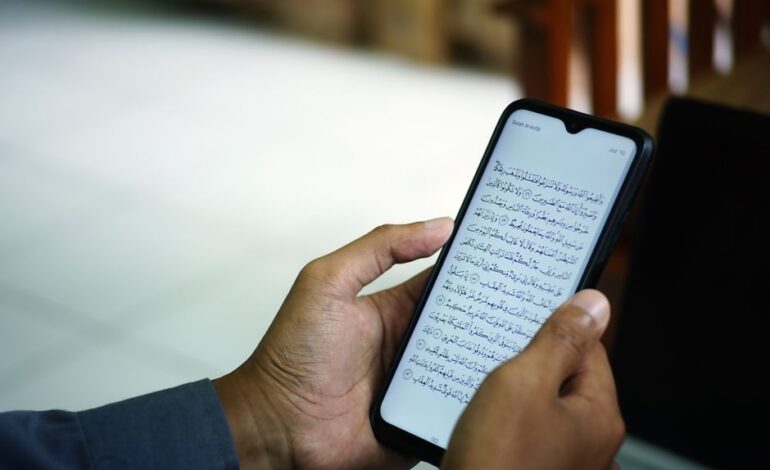
Platforms like Al-Tafsir.com, Sunnah.com, and various open-source digital archives put thousands of pages of hadith literature, classical exegesis (tafsir), and legal rulings (fatwas) in the pocket of any curious teenager with a smartphone. No longer do believers have to rely solely on the Friday sermon (khutbah) or the local imam for answers. They can cross-reference multiple translations, search for specific terms instantly, and bypass institutional gatekeepers entirely.
While this accessibility has fostered a more educated populace, it has also sparked a crisis of authority. When an autodidact on Reddit or Twitter challenges a mainstream ruling using obscure historical texts found online, institutional clerics often struggle to respond using traditional authoritarian models. The era of “because I said so” authority is rapidly drawing to a close.
Exposing Hadith Inconsistencies and Historical Contingency
One of the most significant impacts of the Information Age on Islam is the spotlight it has shone on the complexities and occasional contradictions within the Hadith literature (sayings and actions attributed to Prophet Muhammad).
In the past, ordinary believers viewed canonical collections like Sahih al-Bukhari and Sahih Muslim as monolithic blocks of absolute truth. Today, skeptical intellectuals, progressive reformers, and non-Muslim polemicists utilize search engines to highlight problematic narrations regarding science, gender relations, and human rights that were once buried deep in multi-volume classical Arabic texts.
For example, online forums frequently debate narrations concerning embryology, cosmology, or historical events that clash with modern scientific consensus. Furthermore, the sheer speed of information sharing allows critics to juxtapose differing hadiths on the same topic, revealing internal tensions. This exposure has forced contemporary Muslim theologians to move away from simplistic apologetics toward more nuanced frameworks, such as arguing for the “historical contingency” of certain rulings—a massive shift from traditional literalism.
The Clash Between Medieval Jurisprudence (Fiqh) and Modern Ethics
Islam, like all major ancient religions, developed a complex legal system (fiqh) shaped by the geopolitical, social, and economic realities of the medieval world—from the Umayyad and Abbasid eras onward. Issues such as slavery, concubinage, apostasy laws, and the legal status of women were addressed through the lens of that specific epoch.
In the Information Age, these medieval legal rulings are constantly measured against universal human rights, secular ethics, and modern legal standards. When internet users globally read classical rulings on plural marriage, inheritance disparities, or freedom of conscience, cognitive dissonance often sets in.
Instead of ignoring these contradictions, younger generations are demanding intellectually honest answers. This has led to two distinct digital movements:
The Rise of the “Muslim Skeptic” and Online Deconstruction
Perhaps the most visceral evidence of Information Age Islam is the phenomenon of online religious deconstruction. Across YouTube, TikTok, and specialized subreddits, former Muslims—often referred to as ex-Muslims—build massive platforms analyzing theological flaws, historical errors, and moral inconsistencies in Islamic scripture.
Conversely, a cottage industry of Islamic apologists has emerged to counter these critiques. This digital arena has transformed theology into a spectator sport. Debates between Muslim apologists and secular or Christian critics are livestreamed to hundreds of thousands of viewers in real-time. This high-visibility clash exposes everyday believers to doubts and counter-arguments that their parents’ generation never encountered.
Consequently, faith in the 21st century is rarely inherited passively; it is actively forged—or lost—in the digital crucible of the internet.
Toward a Resilient Future: Reformation or Fragmentation?
The exposure of theological inconsistencies via the internet does not necessarily spell the decline of Islam. Throughout history, major religions have undergone profound transformations when confronted with new technologies of communication—from the printing press to the internet. The printing press catalyzed the Protestant Reformation in Christianity; the internet is currently acting as a catalyst for a decentralized, often turbulent evolution within Islam.
To survive and thrive in the Information Age, Islamic thought must lean into intellectual transparency, embrace historical-critical methods of study, and engage honestly with ethical critiques. Clinging to rigid, unyielding dogmatism in an age of hyper-connectivity only accelerates the alienation of questioning minds.
Ultimately, Information Age Islam is forcing a transition from blind following (*taqlid*) to conscious, scrutinized conviction (*research-backed faith*). While the journey is uncomfortable and fraught with theological turbulence, it may ultimately pave the way for a more robust, self-aware, and ethically resilient global Islamic discourse.
For over fourteen centuries, Islamic theology was largely preserved, interpreted, and disseminated by institutional authorities—madrasas, muftis, and state-sanctioned clerics. Today, that monopoly on knowledge is fracturing. We are living deep within the Information Age, a digital era characterized by instant search engines, global social media platforms, digitized canonical texts, and decentralized online forums. As billions of Muslims gain unprecedented, 24/7 access to primary sources, historical critiques, and cross-cultural theological debates, the religion is experiencing a profound intellectual reckoning. The internet is no longer just a tool for preaching; it is a mirror exposing theological inconsistencies, historical evolution, and modern contradictions within traditional Islamic thought.
The Democratization of Knowledge and the Collapse of Clerical Gatekeeping
Historically, studying Islam required years of rigorous immersion under a traditional scholar (alim). This system ensured that texts were read within a specific jurisprudential framework and historical context. However, the internet has completely democratized—and some argue fractured—this pipeline.
Platforms like Al-Tafsir.com, Sunnah.com, and various open-source digital archives put thousands of pages of hadith literature, classical exegesis (tafsir), and legal rulings (fatwas) in the pocket of any curious teenager with a smartphone. No longer do believers have to rely solely on the Friday sermon (khutbah) or the local imam for answers. They can cross-reference multiple translations, search for specific terms instantly, and bypass institutional gatekeepers entirely.
While this accessibility has fostered a more educated populace, it has also sparked a crisis of authority. When an autodidact on Reddit or Twitter challenges a mainstream ruling using obscure historical texts found online, institutional clerics often struggle to respond using traditional authoritarian models. The era of “because I said so” authority is rapidly drawing to a close.
Exposing Hadith Inconsistencies and Historical Contingency
One of the most significant impacts of the Information Age on Islam is the spotlight it has shone on the complexities and occasional contradictions within the Hadith literature (sayings and actions attributed to Prophet Muhammad).
In the past, ordinary believers viewed canonical collections like Sahih al-Bukhari and Sahih Muslim as monolithic blocks of absolute truth. Today, skeptical intellectuals, progressive reformers, and non-Muslim polemicists utilize search engines to highlight problematic narrations regarding science, gender relations, and human rights that were once buried deep in multi-volume classical Arabic texts.
For example, online forums frequently debate narrations concerning embryology, cosmology, or historical events that clash with modern scientific consensus. Furthermore, the sheer speed of information sharing allows critics to juxtapose differing hadiths on the same topic, revealing internal tensions. This exposure has forced contemporary Muslim theologians to move away from simplistic apologetics toward more nuanced frameworks, such as arguing for the “historical contingency” of certain rulings—a massive shift from traditional literalism.
The Clash Between Medieval Jurisprudence (Fiqh) and Modern Ethics
Islam, like all major ancient religions, developed a complex legal system (fiqh) shaped by the geopolitical, social, and economic realities of the medieval world—from the Umayyad and Abbasid eras onward. Issues such as slavery, concubinage, apostasy laws, and the legal status of women were addressed through the lens of that specific epoch.
In the Information Age, these medieval legal rulings are constantly measured against universal human rights, secular ethics, and modern legal standards. When internet users globally read classical rulings on plural marriage, inheritance disparities, or freedom of conscience, cognitive dissonance often sets in.
Instead of ignoring these contradictions, younger generations are demanding intellectually honest answers. This has led to two distinct digital movements:
The Rise of the “Muslim Skeptic” and Online Deconstruction
Perhaps the most visceral evidence of Information Age Islam is the phenomenon of online religious deconstruction. Across YouTube, TikTok, and specialized subreddits, former Muslims—often referred to as ex-Muslims—build massive platforms analyzing theological flaws, historical errors, and moral inconsistencies in Islamic scripture.
Conversely, a cottage industry of Islamic apologists has emerged to counter these critiques. This digital arena has transformed theology into a spectator sport. Debates between Muslim apologists and secular or Christian critics are livestreamed to hundreds of thousands of viewers in real-time. This high-visibility clash exposes everyday believers to doubts and counter-arguments that their parents’ generation never encountered.
Consequently, faith in the 21st century is rarely inherited passively; it is actively forged—or lost—in the digital crucible of the internet.
Toward a Resilient Future: Reformation or Fragmentation?
The exposure of theological inconsistencies via the internet does not necessarily spell the decline of Islam. Throughout history, major religions have undergone profound transformations when confronted with new technologies of communication—from the printing press to the internet. The printing press catalyzed the Protestant Reformation in Christianity; the internet is currently acting as a catalyst for a decentralized, often turbulent evolution within Islam.
To survive and thrive in the Information Age, Islamic thought must lean into intellectual transparency, embrace historical-critical methods of study, and engage honestly with ethical critiques. Clinging to rigid, unyielding dogmatism in an age of hyper-connectivity only accelerates the alienation of questioning minds.
Ultimately, Information Age Islam is forcing a transition from blind following (*taqlid*) to conscious, scrutinized conviction (*research-backed faith*). While the journey is uncomfortable and fraught with theological turbulence, it may ultimately pave the way for a more robust, self-aware, and ethically resilient global Islamic discourse.

Related Posts


The Problem of Evil: Exploring Faith, Suffering, and Meaning
Explore the philosophical and theological dimensions of the problem of evil, including free will, theodicy,

Indoctrination vs. Education: Key Differences and Why It Matters
Discover the critical differences between indoctrination and education, and why fostering critical thinking is essential

The ‘Good Person’ Myth: Why Fear of Eternal Punishment Undermines True Morality
Explore why relying on eternal punishment to be good makes you less moral. Learn the