Debunking the Exodus: What Historians Say About Slaves
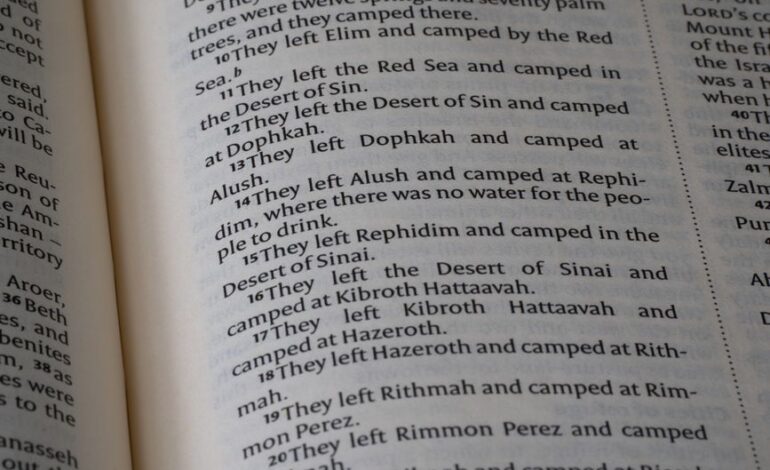
Few narratives in human history are as deeply ingrained in the cultural and religious fabric of Western civilization as the biblical Exodus. The epic tale of millions of Hebrew slaves breaking the chains of Egyptian bondage, wandering the Sinai desert, and claiming a Promised Land forms the foundational mythos of Judaism, Christianity, and Islam alike. But as modern archaeology and historical scholarship have advanced, a profound gap has emerged between sacred text and physical evidence.
The Popular Narrative vs. Archaeological Reality
For centuries, the story of the Exodus was accepted almost universally as literal history. However, the rise of modern archaeology in the 20th and 21st centuries has prompted historians to take a closer, more critical look at the Egyptian record. When researchers cross-reference the biblical accounts with contemporary Egyptian administrative texts, monumental inscriptions, and material culture, a surprising consensus begins to form: the traditional Exodus narrative, as described in the Book of Exodus, did not happen the way the text describes.
What the Text Claims
According to the biblical timeline, the Exodus involved roughly 600,000 Israelite men, plus women and children—totaling upwards of two million people—leaving Egypt en masse around the 15th or 13th century BCE. Such a massive demographic shift, coupled with the dramatic plagues and the destruction of Pharaoh’s elite chariot army in the Red Sea, would have crippled ancient Egypt’s economy and military.
What the Archives Show
Yet, ancient Egypt was one of the most meticulous record-keeping societies in the ancient world. They recorded agricultural yields, foreign trade, military campaigns, and even internal labor strikes on papyrus, stone, and tomb walls. Strikingly, there is not a single mention of a massive Hebrew slave population, a series of devastating plagues, a runaway workforce, or a drowned pharaoh anywhere in the Egyptian archaeological record.
Where Are the Artifacts in the Sinai?
Another major hurdle for historians attempting to validate the traditional Exodus account is the Sinai Peninsula. The Bible states that two to three million Israelites wandered the arid wilderness for forty years.
Archaeologists and surveyors have spent decades scouring the Sinai Desert. If millions of people lived in tents, buried their dead, set up camp, and cooked meals over campfires for four decades, they would have left behind an undeniable trail of material culture—broken pottery, campsites, hearths, and human graves. However, intensive surveys have revealed almost no evidence of a large-scale human presence during the Late Bronze Age. The archaeological footprint simply does not exist.

The Indigenous Origins of Israel
If the Israelites didn’t march out of Egypt, where did they come from? Modern archaeological consensus points to a much more localized and evolutionary origin: the Israelites were actually Canaanites all along.
During the late 13th and early 12th centuries BCE, a socio-political collapse occurred across the Levant. City-states in Canaan weakened, and highland regions began to see a sudden proliferation of small, unfortified farming villages. Material culture in these new highland settlements—such as pottery styles, house layouts, and agricultural methods—is virtually identical to preceding Canaanite culture.
In short, the early Israelites didn’t conquer Canaan from the outside after a miraculous desert journey; they *emerged* from within Canaan as a distinct ethnic group, gradually separating themselves culturally and religiously from their neighbors through the development of Yahwism.
Is There Any Historical Core to the Exodus?
While mainstream historians debunk the literal, mass-migration narrative, most agree that myths rarely emerge from a complete vacuum. Is there a historical kernel buried within the Exodus story?
- Small-Scale Migrations: Egypt frequently employed or enslaved small groups of Asiatic nomads and laborers (referred to as *Aaru* or *Shasu*). It is entirely possible that a small clan or tribe of Canaanites experienced forced labor in Egypt and successfully escaped back to the southern Levant, bringing harrowing tales of oppression with them.
- Egyptian Control of Canaan: During the New Kingdom period, Egypt exerted direct political and military control over Canaan. For generations of Canaanites, Egypt was effectively the overlord—a psychological ‘house of bondage’ that left a deep cultural impression.
- Mythologizing Memory: Over centuries of oral tradition, the memories of small-scale labor, Egyptian imperialism, and the eventual rise of a distinct Israelite identity were magnified, mythologized, and woven together into a grand foundational epic.
Conclusion: Separating History from Theology
Debunking the historical accuracy of the Exodus does not diminish its profound cultural, literary, and theological value. Modern historians view the Exodus not as a journalistic report of historical events, but as a masterpiece of theological literature. It was written—likely finalized during or after the Babylonian Exile—to give hope, identity, and resilience to a displaced people facing foreign oppression.
By understanding what modern archaeology says, we can appreciate the Exodus narrative for what it truly is: a brilliant, enduring myth that transformed a small group of highland farmers into a people with an unforgettable story of liberation.