Historical-Critical Analysis of Islamic Texts & Inerrancy
The concept of textual inerrancy is a foundational pillar for many religious traditions, particularly within orthodox Islamic theology regarding the Quran. The traditional narrative posits that the Quran exists as an immutable, eternal archetype in heaven and was transmitted to the Prophet Muhammad without alteration, then compiled into a single standardized text under Caliph Uthman ibn Affan. However, the academic discipline of the Historical-Critical Method approaches these sacred texts not as static divine phenomena, but as historical documents embedded within specific sociopolitical, linguistic, and cultural contexts.
What is the Historical-Critical Method?
Developed primarily within biblical studies during the 17th and 18th centuries before expanding to Near Eastern and Islamic studies in the 19th and 20th centuries, the historical-critical method seeks to understand a text’s origin and development. Instead of accepting dogma at face value, scholars utilizing this approach ask critical questions:
- What were the historical circumstances surrounding the text’s composition?
- Who were the intended audiences, and what cultural idioms did they employ?
- How did the text evolve, change, or get compiled over time before reaching its canonical form?
- What linguistic and intertextual influences shaped the language of the scripture?
When applied to Islamic texts—including the Quran, the Hadith (traditions), and the Sira (biographies of Muhammad)—scholars reveal a dynamic, evolving historical process rather than a monolithic, instantaneous transmission.
1. The Variant Readings (Qira’at) and Manuscript Evidence
Traditional Islamic apologetics maintain that the Quran has remained completely unchanged since the time of Uthman. However, historical-critical analysis points to significant early manuscript variations and the existence of canonical and non-canonical reading traditions, known as the *Qira’at*.
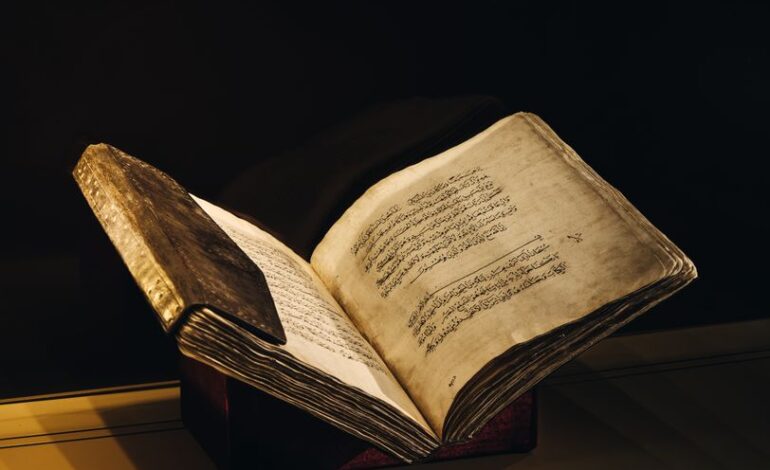
The discovery of the Sana’a manuscripts in 1972 provided profound insights into early Quranic codices. Palimpsests (manuscripts where the original text was washed off to write a new one) revealed underlying lower texts that differed from the standard Uthmanic consonantal text in word order, phrasing, and vocabulary. Academic pioneers like Christoph Luxenberg and Gerd Puin argued that early Arabic orthography was ambiguous—lacking the diacritical dots (fathah, kasrah, dammah) and consonant-distinguishing dots used today—which naturally permitted multiple legitimate readings and variations during the formative period.
2. Intertextuality and Late Antique Milieu
Historical-critical analysis places the emergence of Islam squarely within the religious landscape of Late Antiquity. Rather than viewing the Quran as completely isolated from surrounding traditions, revisionist and mainstream academic scholarship alike highlight profound parallels between Quranic narratives and earlier Judeo-Christian, rabbinic, and apocryphal literature.

Stories of prophets such as Abraham, Moses, and Jesus often mirror motifs found in Syrian Christian hymns (such as those of Ephrem the Syrian), Jewish midrashim, and Christian apocrypha (like the Infancy Gospel of Thomas). Critics of inerrancy point to these parallels to argue that the Quranic text engages in a sophisticated dialogue with the religious ideas circulating in the 7th-century Arabian Peninsula, reflecting human assimilation and divine reinterpretation of existing regional lore.
3. The Evolution of the Hadith Literature
While the Quran forms the primary legislative base of Islam, the Hadith literature provides the operational framework for Islamic law (Sharia) and daily practice. From a historical-critical standpoint, the inerrancy claim for Hadith is even more precarious than that of the Quran.
Western scholars, starting notably with Ignác Goldziher and later expanded by Joseph Schacht, argued that the vast body of Hadith attributed to Prophet Muhammad was largely fabricated during the 2nd and 3rd Islamic centuries to legitimize theological, legal, and political positions of later sectarian movements. Even within the rigorous Sunni criteria of Hadith criticism (*Ilm al-Rijal* or the science of narrators), historical analysis shows that chains of transmission (*isnad*) could be retrojected (*isnad back*) to lend apostolic authority to emerging contemporary legal opinions.
The Theological Implications of Historical-Critical Analysis
Deconstructing the claim of absolute inerrancy invites both crisis and renewal within Islamic thought. For conservative theologians, historical-critical methodologies are often dismissed as inherently reductionist, biased, or hostile to faith, as they reduce transcendent truths to historical contingencies.
Conversely, progressive Muslim thinkers and secular historians argue that embracing historical context does not necessarily destroy spiritual meaning. Instead, it allows believers and researchers to see sacred texts as living documents that addressed the pressing ethical, social, and spiritual needs of a specific historical community—thus opening the door for modern contextual reininterpretation rather than literalistic stagnation.
Conclusion
Deconstructing the inerrancy claim through the lens of historical-critical analysis is not an exercise in polemics, but a rigorous academic pursuit of history. By examining manuscript variants, the Late Antique milieu, and the evolution of traditions, scholars illuminate the complex, fascinating human processes behind the formation of foundational Islamic texts. As academic research continues to unearth new manuscripts and linguistic keys, the dialogue between faith-based dogma and historical reality remains one of the most vital frontiers in the study of religion.