Secularism vs Theocracy: Why Islamic States Struggle
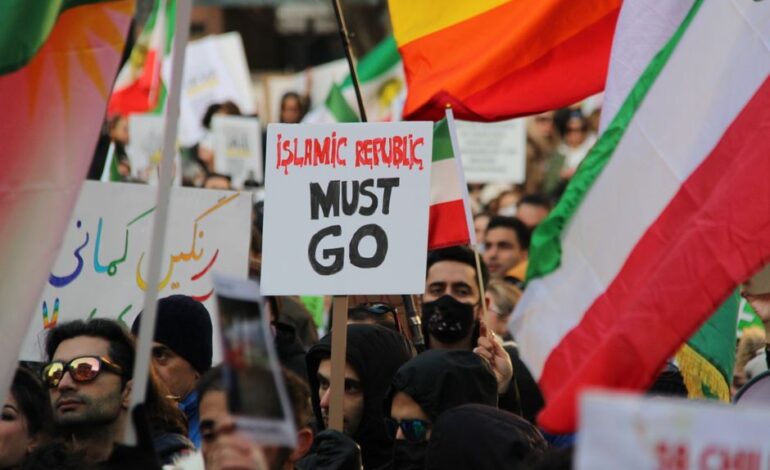
The intersection of religion and politics remains one of the most volatile and debated topics in modern political science. While much of the Western world has gradually transitioned toward secular governance, many Muslim-majority nations continue to grapple with the concept of theocracy or state-sanctioned Islam. The ongoing friction between secularism and theocracy often manifests in a fundamental struggle: why do Islamic states frequently struggle to establish and sustain stable, inclusive democratic governance?
Defining the Terms: Secularism vs. Theocracy
To understand the political dynamics of the contemporary Muslim world, we must first define the two governance models at opposite ends of this ideological spectrum:
- Theocracy (or Religious Governance): A system where religious leaders rule in the name of God, or where the state’s legal and political structures are explicitly derived from religious law (such as Sharia). In these systems, divine authority supersedes popular sovereignty.
- Secularism: A principle that separates religion from political, civil, and educational institutions. In a secular democracy, laws are made by elected representatives based on civic reason and human rights, rather than holy texts, ensuring freedom of (and from) religion for all citizens.
Democracy inherently relies on the premise of popular sovereignty—the idea that the power of the state is created and sustained by the consent of its people. When a state adopts a theocratic or heavily religion-based framework, a structural tension immediately arises between the voice of the electorate and the immutable decrees of religious doctrine.
The Core Conflict: Divine Sovereignty vs. Popular Sovereignty
At the heart of the democratic struggle in many Islamic states is a clash of ultimate authorities. Western democracies operate on the assumption that laws can be debated, amended, and repealed by human lawmakers. In contrast, classical Islamic jurisprudence (Fiqh) views divine law as complete, eternal, and non-negotiable.
When a constitution declares that no law can contradict the tenets of Islam—as is common in many Middle Eastern and North Asian countries—it places a permanent ceiling on democratic reform. If a democratically elected parliament votes to legalize something prohibited by traditional religious interpretation (such as certain civil rights reforms or freedom of conscience), the judiciary or unelected clerics can veto the legislation. This dynamic creates a “defective democracy” or an authoritarian regime hiding behind a democratic facade.
Historical and Colonial Legacies
Blaming theology alone paints an incomplete picture. The political struggles of Islamic nations are deeply intertwined with historical contexts, particularly the legacy of European colonialism.
During the 19th and 20th centuries, European powers drew arbitrary borders across the Middle East and North Africa, often installing compliant monarchs or authoritarian dictators. When secular authoritarian regimes (such as Ba’athism in Iraq and Syria, or the Pahlavi dynasty in Iran) attempted to force rapid, top-down secularization—often accompanied by brutal repression—they alienated traditional and religious populations.

Consequently, secularism became associated in the public mind with tyranny, foreign imperialism, and cultural alienation. When political openings eventually occurred, religious movements (most notably the Muslim Brotherhood and various Islamist parties) positioned themselves not just as defenders of faith, but as champions of anti-colonial resistance and social justice.
The Rights of Minorities and Dissent
A crucial pillar of true democracy is the protection of minority rights and freedom of expression, including the right to criticize religion or state ideology. Theocratic and semi-theocratic states struggle immensely with this requirement.
Under strict religious governance:
- Religious minorities often find themselves relegated to second-class citizenship (such as the historical dhimmi status or modern legal restrictions on non-Muslim proselytization).
- Apostasy and blasphemy laws are frequently weaponized to silence political dissidents, secular intellectuals, and human rights activists.
- Gender equality is severely undermined, as traditional family laws often codify patriarchal interpretations of inheritance, divorce, and guardianship.
Without robust protections for freedom of speech and conscience, opposition parties cannot fairly compete, and the ruling establishment remains insulated from democratic accountability.
Is Reconciliation Possible? Islamic Modernism and Reform
Despite these profound structural hurdles, writing off the possibility of democracy in the Islamic world is overly deterministic. A vibrant movement of Islamic reformers, progressive intellectuals, and theologians argue that Islam is compatible with democratic pluralism through the concepts of Ijtihad (independent reasoning) and Shura (consultation).
Nations like Tunisia (following its 2011 revolution, though facing subsequent democratic backsliding) demonstrated that civil society can negotiate a hybrid path. Furthermore, countries like Indonesia—the world’s most populous Muslim-majority nation—have largely sustained a functioning, albeit imperfect, constitutional democracy by anchoring their state on Pancasila (pluralistic state principles) rather than a singular religious law.
Conclusion: The Path Forward
The struggle between secularism and theocracy in Islamic states is not merely a theological debate; it is a battle for political survival, human rights, and modernization. Until these nations can successfully decouple the apparatus of the state from clerical authority and guarantee equal citizenship regardless of faith, true democratic governance will remain elusive. For democracy to take deep root, societies must evolve to a point where popular sovereignty and the protection of universal human rights triumph over rigid religious dogma.