Who Really Wrote the Bible? The Surprising History
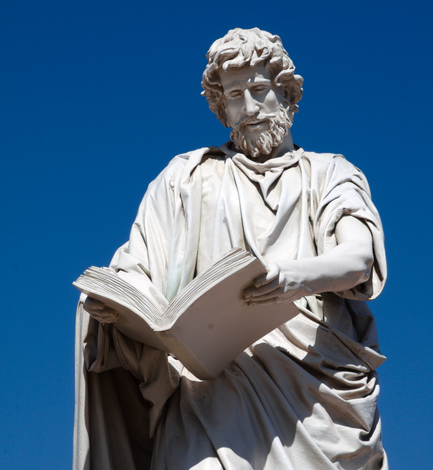
If you grew up learning about the Bible, you probably have a mental image of the authors: Moses furiously scribbling down Genesis on Mount Sinai, King David strumming a harp while penning the Psalms, or the Apostle Paul dictating letters by candlelight. But modern biblical scholarship tells a vastly different, infinitely more fascinating story—one involving anonymous scribes, centuries of oral tradition, political agendas, and committee-style editing.
So, who really wrote the Bible? Spoiler alert: It wasn’t just one person, it wasn’t always who tradition claims, and it certainly didn’t happen overnight. Let’s dive into the fascinating historical reality behind the world’s most famous book.
The Myth of the Single Author
First, let’s clear up a major misconception: the Bible is not a book. It’s a library. Composed of 66 books (in Protestant traditions) or more (in Catholic and Orthodox traditions), it was written over a span of roughly 1,500 years by dozens of different contributors spanning three continents (Asia, Africa, and Europe) and written in three languages (Hebrew, Aramaic, and Greek).
Attributing entire sections to single historical figures was a common ancient practice known as pseudepigraphy or attribution by association. However, textual analysis, archaeology, and historical linguistics have blown the lid off traditional authorship claims.
Who Wrote the Old Testament (Hebrew Bible)?
For centuries, tradition held that Moses wrote the first five books of the Bible (the Pentateuch or Torah). However, even ancient scholars noticed internal contradictions—such as Moses recording the details of his own death in Deuteronomy. By the 17th and 18th centuries, scholars began developing what is known today as the Documentary Hypothesis.
1. The J, E, D, and P Sources
Scholars like Julius Wellhausen demonstrated that the Torah was actually compiled from at least four distinct literary sources over centuries:
- The Yahwist (J): Likely written around the 10th century BCE in the southern kingdom of Judah, this source uses the personal name Yahweh for God and portrays God in a very human, anthropomorphic way (walking in the garden, etc.).
- The Elohist (E): Emerging around the 8th century BCE in the northern kingdom of Israel, this source refers to God as Elohim and favors dreams and angels as mediums of divine communication.
- The Deuteronomist (D): Tied heavily to the book of Deuteronomy and the reforms of King Josiah around 622 BCE, this voice emphasizes obedience, covenant, and centralizing worship in Jerusalem.
- The Priestly Source (P): Written during or after the Babylonian Exile (6th century BCE), this source is obsessed with genealogies, rituals, temple laws, and Sabbaths.
These four streams were eventually woven together by later redactors (editors) into the five books we read today. Moses may be the central character of the narrative, but he certainly wasn’t the author holding the pen.
2. The Prophets and Historical Books
Books like Isaiah show clear evidence of multiple authors. Modern scholars generally divide Isaiah into three distinct sections written by different people in different centuries: First Isaiah (chapters 1–39, pre-exilic), Second Isaiah (chapters 40–55, written during the Babylonian exile), and Third Isaiah (chapters 56–66, post-exilic). Meanwhile, historical books like Kings and Chronicles were compiled from court records, royal annals, and earlier prophetic legends.

Who Wrote the New Testament?
When we move to the New Testament, the waters get equally murky. While we have named documents like the Gospels of Matthew, Mark, Luke, and John, the names attached to them were actually added by church tradition in the 2nd century. The original texts circulated anonymously.
1. The Gospels Were Anonymous
None of the Gospel writers claim to be eyewitnesses named Matthew, Mark, Luke, or John. In fact, scholars generally agree on the following timeline and authorship realities:
- Mark was the earliest gospel (written around 70 CE), penned by an unknown Greek-speaking Christian, likely drawing on earlier oral traditions.
- Matthew and Luke followed, both using Mark as a source, alongside another hypothetical lost collection of Jesus’ sayings known to scholars as the Q Source.
- John was written last (around 90–100 CE) by an anonymous member of the “Johannine community,” heavily influenced by high Christology and mystical theology.
2. The Letters of Paul: The Real Deal (Mostly)
Paul of Tarsus is the rockstar of New Testament authorship. Scholars generally agree that Paul genuinely wrote seven of the letters attributed to him: Romans, 1 and 2 Corinthians, Galatians, Philippians, 1 Thessalonians, and Philemon. These were written between roughly 48 and 60 CE, making them some of the earliest Christian documents in existence.
However, letters like Ephesians, Colossians, 2 Thessalonians, 1 and 2 Timothy, and Titus (often called the “Deutero-Pauline” or “Pastoral” epistles) are widely considered by modern historians to be written by later followers using Paul’s name to address new church controversies—a common and accepted practice in the ancient Greco-Roman world.
Why Does This Matter?
For some believers, learning that the Bible was written by a community of diverse human editors rather than dictated directly by God can feel jarring. But for theologians and historians, this discovery enriches the text.
Instead of viewing the Bible as a static rulebook dropped from the sky, understanding its authorship allows us to see it as a vibrant, living library of real human beings wrestling with faith, suffering, politics, and the divine over thousands of years. It reflects real historical crises—like the destruction of Jerusalem or the Babylonian exile—making the texts deeply human and profoundly relatable.
Conclusion: A Human and Divine Tapestry
So, who really wrote the Bible? Anonymous scribes, exiled priests, political reformers, prophetic poets, and early Christian communities. It is a mosaic of human voices coming together to tell a grand story. Whether you read it as sacred scripture or historical literature, understanding the real authors behind the pages only deepens the mystery and majesty of how this incredible library came to be.
What are your thoughts on the real authorship of the Bible? Did it surprise you? Let’s discuss in the comments below!