2026 Forecast: Is Atheism a Threat or a Catalyst for Change in SA’s Religious Sphere?
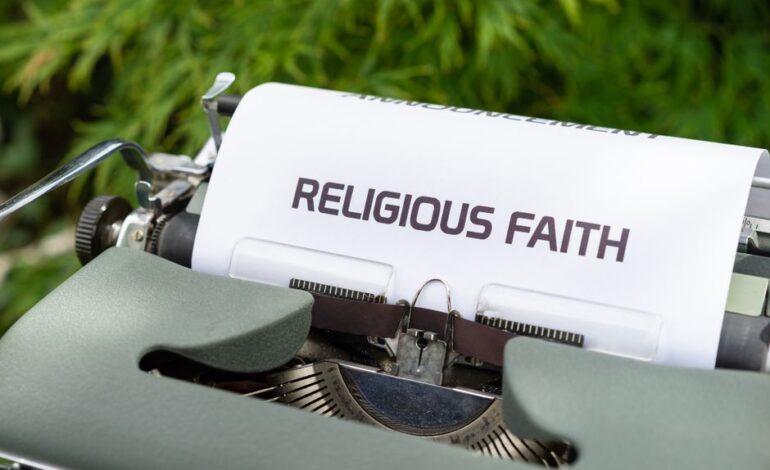
South Africa, a nation celebrated for its vibrant diversity, extends this characteristic profoundly into its religious landscape. From the deep roots of indigenous spiritual practices to the widespread presence of Christianity, Islam, Hinduism, and Judaism, faith has long been a foundational pillar of its social fabric. However, as we look towards 2026, a significant shift is becoming increasingly visible: the rise and growing visibility of atheism and non-religious worldviews. This begs a crucial question for the nation’s spiritual future: Is atheism a looming threat to SA’s established religious sphere, or is it, in fact, a powerful catalyst for necessary introspection and transformative change?
\n\n\n\n
South Africa’s Religious Tapestry: A Brief Overview
\n\n\n\nHistorically, religion has played a multifaceted role in South Africa, often intertwined with cultural identity, community cohesion, and even political movements. Post-apartheid, the constitutional guarantee of religious freedom has allowed for an even greater flourishing of diverse faiths. Christianity, in its various denominations, remains dominant, but the nation’s spiritual identity is far from monolithic. This rich background sets the stage for understanding the potential impact of a growing secular voice.
\n\n\n\nThe Growing Voice of Atheism in SA Today
\n\n\n\nWhile still a minority, the non-religious population in South Africa is becoming more vocal and organized. Online communities, secular humanist associations, and public advocacy groups are increasingly visible, challenging traditional narratives and fostering spaces for critical inquiry. This demographic shift, particularly among younger generations, is influenced by global trends of secularization, increased access to information, and a re-evaluation of inherited beliefs.
\n\n\n\nPerception 1: Atheism as a \”Threat\” to the Religious Sphere
\n\n\n\nFor many within traditional religious communities, the rise of atheism is often perceived with apprehension, even as a threat. These concerns are not unfounded from their perspective:
\n\n\n\n- \n
- Erosion of Traditional Values: Religious institutions often see themselves as custodians of moral and cultural values. The perceived rejection of religious frameworks can be seen as an attack on these foundational principles, leading to fears of societal decay. \n
- Challenge to Authority: Established religious hierarchies and doctrines derive authority from divine mandate or long-held tradition. Atheism, by questioning these very foundations, directly challenges this authority, potentially unsettling the power structures within religious organizations. \n
- Social Cohesion Concerns: In communities where religion is a primary unifying force, a decline in adherence or the rise of non-belief can raise fears of social fragmentation and a loss of shared identity. \n
- Existential Questions: For believers, the concept of a life without God can be deeply unsettling, prompting questions about purpose, meaning, and morality in a world perceived as divinely ordered. \n
Perception 2: Atheism as a \”Catalyst for Change\”
\n\n\n\nConversely, many argue that the increasing visibility of atheism is not a threat, but rather a powerful catalyst for positive evolution within the religious sphere. This perspective highlights several transformative potential outcomes:

- \n
- Promoting Critical Thinking and Introspection: The presence of non-believers encourages religious individuals and institutions to critically examine their beliefs, practices, and teachings. This can lead to deeper understanding, more robust apologetics, or even necessary reforms. \n
- Encouraging Adaptation and Modernization: To remain relevant in a diverse and increasingly secularized world, religious institutions may be prompted to adapt their messaging, engage more deeply with contemporary issues, and foster more inclusive environments. \n
- Driving Social Justice: Many secular humanists and atheists are deeply committed to social justice, human rights, and ethical living, often collaborating with religious groups on shared humanitarian goals, fostering dialogue and mutual respect. \n
- Fostering Inclusive Dialogue: The presence of atheism necessitates broader conversations about ethics, morality, and societal values that transcend specific religious dogmas, potentially leading to a more inclusive public discourse. \n
- Challenging Hypocrisy and Dogmatism: A secular voice can hold religious institutions accountable for inconsistencies, ethical lapses, or outdated doctrines, pushing for greater integrity and transparency. \n
The 2026 Forecast: A Nuanced Reality
\n\n\n\nBy 2026, it is highly unlikely that atheism will have ‘overthrown’ religion in South Africa. Instead, the forecast points towards a more nuanced and dynamic reality:
\n\n\n\n- \n
- Increased Visibility and Acceptance: Non-belief will likely become more openly discussed and accepted as a legitimate worldview, moving further out of the shadows. \n
- Heightened Dialogue (and Tension): Expect more public debates and discussions between religious and secular communities. While some of these may be tense, they are crucial for mutual understanding and the evolution of societal norms. \n
- Religious Adaptation: Many religious institutions will likely respond by either becoming more introspective, community-focused, and socially engaged, or by reinforcing more fundamentalist stances in response to perceived external pressures. \n
- Greater Secular Influence in Public Life: There may be increased advocacy for the strict separation of church and state, ensuring that public policy is inclusive of all citizens, regardless of their belief or non-belief. \n
- A More Diverse Spiritual Landscape: Atheism will simply become another thread in South Africa’s already rich and complex tapestry of beliefs and worldviews, challenging the nation to define its values in a way that accommodates everyone. \n
Navigating the Future: Challenges and Opportunities
\n\n\n\nThe journey towards 2026 presents both challenges and opportunities for South Africa’s religious sphere:
\n\n\n\n- \n
- Challenge: Resistance to Change: Entrenched institutions and deeply held beliefs can be slow to adapt, potentially leading to internal conflict or alienation of members. \n
- Challenge: Potential for Polarization: If dialogue is not handled with respect and empathy, the differences between religious and non-religious communities could lead to increased social polarization. \n
- Opportunity: Deeper Engagement with Ethics: Both groups can find common ground in universal ethical principles like compassion, justice, and human dignity, working together for the betterment of society. \n
- Opportunity: Stronger, More Resilient Faith: When challenged, faith communities can emerge stronger, with a more profound understanding of their core tenets and a renewed commitment to their social mission. \n
- Opportunity: A Truly Inclusive Society: By embracing and respecting all worldviews, South Africa can further solidify its commitment to constitutional democracy and human rights for all its citizens. \n
Conclusion: Evolution, Not Eradication
\n\n\n\nAs South Africa marches towards 2026, the question of whether atheism is a threat or a catalyst is not an either/or proposition. It is, in essence, both. While it may challenge the comfort zones of traditional religious institutions, it simultaneously offers an invaluable opportunity for introspection, modernization, and a deeper engagement with the core principles of faith and ethics.
\n\n\n\nThe future of South Africa’s religious sphere is not one of eradication but of evolution. The growing presence of atheism will undoubtedly shape this evolution, pushing the nation towards a more nuanced, inclusive, and critically engaged understanding of belief, non-belief, and the shared human experience.
\n\n\n\nWhat are your thoughts on how atheism will impact South Africa’s religious landscape by 2026? Share your perspective in the comments below!
\n” }