Noah’s Ark Debunked: Why the Great Flood Myth Doesn’t Hold Up
Myth vs. Reality: Why It’s Time to Fact-Check Ancient Fables
Human history is rich with folklore, epic poems, and legendary tales designed to explain the unexplainable, instill moral values, or simply entertain. However, when ancient mythology is treated as literal, empirical science, we cross a line into the absurd. From global deluges involving wooden mega-boats to fantastical beasts, humanity has a long, storied tradition of spinning yarns. Today, we’re taking a hard, unapologetic look at some of history’s most famous tall tales—starting with the crown jewel of ancient maritime mythology: Noah’s Ark.
The Noah’s Ark Problem: Physics, Biology, and Common Sense
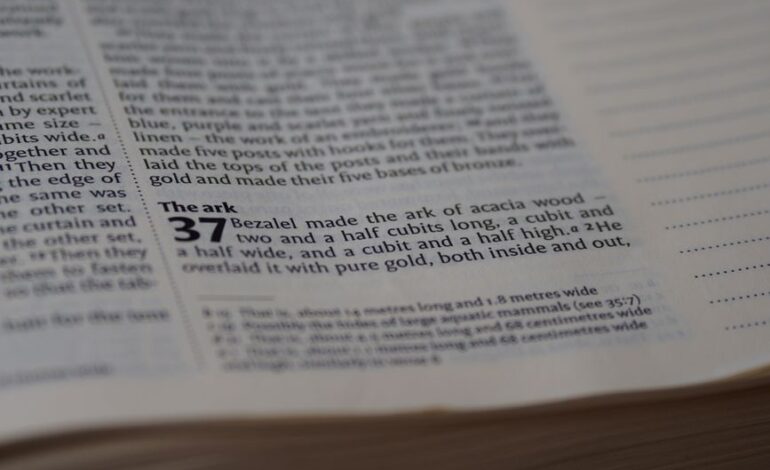
Let’s set the stage. According to the biblical narrative, a 600-year-old man built a wooden boat measuring roughly 300 cubits long to house two of every kind of land-dwelling, air-breathing animal on Earth, along with enough food to sustain them for a year, while a global flood covered the highest mountains.
To put it mildly: the math doesn’t math.
- Structural Integrity: Ancient wooden ships had severe size limitations due to the “hogging and sagging” effect of ocean waves. The largest wooden sailing ships in modern history (like the Wyoming) required iron cross-bracing just to stay afloat, and they still leaked constantly. A gopher-wood box the size of an ocean liner would have snapped in half almost immediately.
- The Menagerie of Doom: Modern science has cataloged over 1.5 million species of insects alone, not to mention millions of vertebrates. Fitting breeding pairs—plus fodder—of millions of species into a single wooden vessel defies every law of biology, volume, and weight capacity.
- The Post-Flood Menu: Once the waters receded, what did the carnivores eat? If lions ate zebras, the zebras would have gone extinct on day one. The ecological bottleneck required for this to work is nothing short of a biological impossibility.
Borrowing Trouble: The Epic of Gilgamesh
What makes the Noah story even more amusing (or tragic, depending on your perspective) is that it isn’t even original. Long before the Hebrew texts were compiled, the ancient Mesopotamians were carving the Epic of Gilgamesh and the Epic of Atrahasis into clay tablets.
These older tales feature a hero named Utnapishtim who builds a giant circular boat, loads his family and animals onto it, and survives a wrathful divine flood. The parallels are so striking that biblical scholars generally agree the Noah myth was heavily inspired by these older regional flood legends. It turns out ancient cultures loved a good “reboot” just as much as modern Hollywood studios.
Other Historical Tall Tales Due for a Reality Check
Noah’s floating zoo isn’t the only tall tale that deserves a savage critique. History is littered with legendary narratives that fall apart the moment you apply critical thinking:

1. The Tower of Babel and the Linguistic Confusion
The story goes that humanity tried to build a brick tower to reach the heavens, so an insecure deity scrambled everyone’s languages, creating the global mosaic of dialects we have today. Modern linguistics laughs in the face of this narrative. We can trace language families, evolutionary shifts, and phonological developments across millennia. Language evolves organically through human migration and social interaction—it wasn’t instantly patched together via divine intervention.
2. The Sun Standing Still for Joshua
In the Book of Joshua, a military leader reportedly commands the sun and moon to stand still so he can finish a battle in daylight. Scientifically speaking, if the Earth suddenly stopped rotating, the atmosphere would keep moving at roughly 1,000 miles per hour at the equator. The resulting global cataclysm would have vaporized the armies, scoured the continents clean, and launched everything into low-earth orbit. Talk about collateral damage.
Why We Still Cling to the Fables
If these stories are so easily dismantled by basic physics, geology, and history, why do millions still defend them as literal truth?
The answer lies in human psychology. Literalism offers comfort in an uncertain world. It provides absolute certainty, a clear-cut moral binary of good versus evil, and a cozy community of believers. Admitting that ancient texts are anthologies of regional mythologies, metaphors, and cultural folklore requires a leap of intellectual maturity that many find terrifying.
Conclusion: Embrace the Metaphor, Ditch the Literalism
You don’t need to believe in a 600-year-old shipbuilder or a globally synchronized drowning event to appreciate the cultural value of ancient literature. Myths can carry profound psychological and poetic truths about human nature, resilience, and our relationship with the cosmos. But when we insist on treating ancient campfire stories as peer-reviewed science, we stall human progress. It’s time to let the Ark sink back into the realm of mythology where it belongs.